
The Baptism of the Lord

Carolyn Kannapel • January 7, 2026

Pastor’s Notes for 11 January 2026 – The Baptism of the Lord
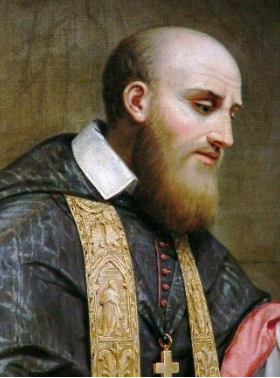
        I am frequently asked questions about dryness in prayer. In reading St Francis de Sales classic, An Introduction to the Devout Life, he beautifully addresses consolations and desolations in prayer. I thought I would share some excerpts of his sage advice. Perhaps, it will be of help to you as you foster Prayer in the new year.


Part IV – Chapter XIII: Of Spiritual and Sensible Consolations, and how to receive them

       1. Devotion does not consist in conscious sweetness and tender consolations, which move one to sighs and tears, and bring about a kind of agreeable, acceptable sense of self-satisfaction. No, my child, this is not one and the same as devotion, for you will find many persons who do experience these consolations, yet who, nevertheless, are evil minded, and consequently are devoid of all true Love of God, still more of all true devotion…

       2. Nevertheless these tender warm emotions are sometimes good and useful, for they kindle the spiritual appetite, cheer the mind, and infuse a holy gladness into the devout life, which embellishes all we do even externally. It was such a taste for holy things that made David cry out, “O how sweet are Thy words unto my throat, yea, sweeter than honey unto my mouth.” (Psalm 119:103) And assuredly the tiniest little comfort received through devotion is worth far more than the most abundant delights of this world. The milk of the Heavenly Bridegroom, in other words His spiritual favors, are sweeter to the soul than the costliest wine of the pleasures of this world, and to those who have tasted thereof all else seems but as gall and wormwood…

       3. But, perhaps you will say, if there are sensible consolations which are undoubtedly good and come from God, and at the same time others which are unprofitable, perilous, even harmful, because they proceed from mere natural causes, or even from the Enemy himself, how am I to know one from the other, or distinguish what is most profitable even among those which are good? It is a general rule, with respect to the feelings and affections, that their test is in their fruits. Our hearts are as trees, of which the affections and passions are their branches, and deeds and acts their fruits. That is, a good heart, of which the affections are good, and those are good affections which result in good and holy actions. If our spiritual tenderness and sweetness and consolation make us more humble, patient, forbearing, charitable and kindly towards our neighbors, more earnest in mortifying our own evil inclinations and lusts, more diligent in our duties, more docile and submissive to those who have a claim to our obedience, more simple in our whole manner of life, then doubtless, my daughter, they come from God…

        4. If we are favored with any such sweetness, we must humble ourselves deeply before God, and beware of being led to cry out “How good I am!” No indeed, such gifts do not make us any better, for, as I have already said, devotion does not consist in such things; rather let us say, “How good God is to those who hope in Him, and to the souls that seek Him!” If a man has sugar in his mouth, he cannot call his mouth sweet, but the sugar; and so although our spiritual sweetness is admirable, and God Who imparts it is all good, it by no means follows that he who receives it is good… As a general rule, we shall do well to receive all such graces and favors humbly, making much of them, not for their own importance, but rather because it is God’s Hand…

        Lastly, I advise you to take counsel with your director concerning any unusual flow of consolations or emotions, so that he may guide you in their wise usage; for it is written, “Hast thou found honey? eat so much as is sufficient for thee” (Prov. 25:16).      https://www.catholicspiritualdirection.org/devoutlife.pdf


       God indeed gives Spiritual Consolations. Yet, being God, they are given to us only when and to what extent that they are truly for our good. Next time, we will hear St Francis de Sales on spiritual dryness.


Nothing Less than saints for the Holy Family of God.

Holy Family, Filled with Spiritual Consolations, Pray for us.

~ Fr Jeremy M. Gries


By Carolyn Kannapel • November 18, 2026
Tradition is at the heart of the Catholic Faith. We acknowledge both the written Tradition of the Scriptures and the Oral Tradition of the Apostolic Witness. The Church has been growing and developing and expanding that which came before it since the Twelve gathered in the Upper Room experienced the Gift of the Holy Spirit at Pentecost. This has been true as the Apostles began to first share & explain the Gospel to others. Each time, they better understood what they were saying. Each time, they were better equipped to share it with others. The truth & effectiveness grew in them as they went forth. Tradition comes from the Latin verb tradere , which means ‘to hand over,’ ‘deliver,’ or ‘pass down’. The Tradition of the Church has been handed down to us through the ages back to the Apostles back to Christ. It is always a gift. And is the greatest of gifts handed on from one generation to the next. We should have immense gratitude & thanksgiving for this Tradition. Such gratitude helps us grow in sanctity. It can be easy to consider this handing on only in terms of the Faith, the tenets of our belief, dogmas & doctrines, pious practices & devotional prayers. These are an important part of our Tradition – the intangible aspects of our Catholic Faith. But it’s easy to overlook the tangible tradition (small ‘t’ intentional) of the Church. Our churches, schools, physical footprint and charitable institutions. These too are a tradition handed on to our current generation. We received our parish church from those who sacrificed to build it. We have done & continue to do our part to care for them, in large part, so that we can hand them on to the next generation. So that those who come after us can have a space to gather to pray, to receive the Sacraments, to socialize & be strengthened in body, mind, & soul. There is also the handed-on tradition of the financial well-being of our parish. We are fortunate to have such stability & strength. And this too is a kind of tradition. Those who came before us paid off the mortgage for the construction of the church & school. We have utilized the financial generosity of current members to update, repair, & replace the physical building systems as needed. Sometimes this was accomplished with special appeals & capital campaigns. Sometimes, through the simple stewardship & prudent budgeting of the ordinary resources. Always, it has been an act of handing things on better than they were. It is an act of gratitude & thanksgiving. Many have made an effort to leave a lasting legacy for the well-being of Holy Family. During my time in the parish, we have benefited from more than a dozen estate bequests. Faithful parishioners in life who wanted to leave a lasting gift upon their death. These funds have been very useful to achieving long lasting goals for parish ministry & mission. We are fortunate as a parish not to depend upon such gifts year to year. (There are such parishes!) And yet, their impact is not inconsequential. They have each made an immediate impact in the present and strengthened a more secure future for our parish. The Finance Council has a Bequest Policy that applies for any undesignated bequest greater than $5000. One third of the bequests is put into the parish endowment. One third is reserved for capital projects. One third is released for immediate need within the current fiscal year budget. Such a policy allows us to intentionally & purposefully utilize the legacy of the past parishioner in a measured & disciplined manner. Of course, all designated bequests are utilized as requested by the donor. The parish has two primary endowments held by the Archdiocese of Indianapolis Catholic Community Foundation . These two Endowments – 1 for the parish and 1 for the school – are held in perpetuity and managed to generate income for ministry needs. Fortunately, we are not dependent upon either of these endowments for ordinary operations. And I pray we never are. The late Archbishop Buechlein once stated, ‘It is the responsibility of today’s Catholics to provide for today’s Church, and yet, endowments can provide a lasting legacy of faith.’ But they are a blessing to have to ensure the Legacy of our parish. Have you prayerfully considered remembering Holy Family Catholic Church in your estate plans? And for the record, I have already done so. This parish, this community, this Holy Family family is important to me. I have worked with you to make this a better place than I found it. And I am interested in seeing Holy Family thrive long after I’m gone. I want the Catholic Tradition to be handed on until Christ the King comes again. Nothing Less than saints for the Holy Family of God. Holy Family, rich in gratitude & thanksgiving, Pray for us. ~ Fr Jeremy M. Gries
By Carolyn Kannapel • November 11, 2026
Pastor’s Notes for 15 November 2026 – 33rd Sunday in Ordinary Time
By Carolyn Kannapel • November 4, 2026
Pastor’s Notes for 08 November 2026 – 32nd Sunday in Ordinary Time
By Carolyn Kannapel • October 28, 2026
Pastor’s Notes for 01 November 2026 – Solemnity of All Saints
By Carolyn Kannapel • October 21, 2026
Pastor’s Notes for 25 October 2026 – Thirtieth Sunday of Ordinary Time
By Carolyn Kannapel • October 14, 2026
Director of Campus & Youth Ministry
By Carolyn Kannapel • October 7, 2026
Pastor’s Notes for 11 October 2026 – Twenty-Eighth Sunday of Ordinary Time
By Carolyn Kannapel • September 23, 2026
Parish Annual Report
By Carolyn Kannapel • September 16, 2026
Catechetical Sunday
By Carolyn Kannapel • September 9, 2026
Pastor’s Notes for 13 Sept 2026 – Twenty-Fourth Sunday of Ordinary Time